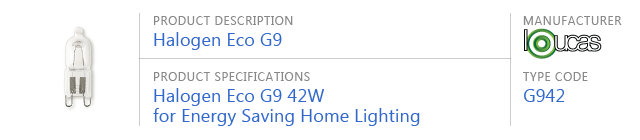
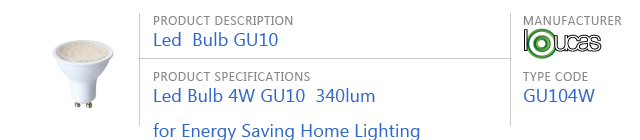
A Light Emitting Diode (LED) is a two-lead semiconductor light source. It is a basic pn-junction diode, which emits light when activated. When a suitable voltage is applied to the leads, electrons are able to recombine with electron holes within the device, releasing energy in the form of photons. This effect is called electroluminescence, and the color of the light (corresponding to the energy of the photon) is determined by the energy band gap of the semiconductor. An LED is often small in area (less than 1 mm2) and integrated optical components may be used to shape its radiation pattern.
Appearing as practical electronic components in 1962,[8]
the earliest LEDs emitted low-intensity infrared light. Infrared LEDs
are still frequently used as transmitting elements in remote-control
circuits, such as those in remote controls for a wide variety of
consumer electronics. The first visible-light LEDs were also of low
intensity, and limited to red. Modern LEDs are available across the visible, ultraviolet, and infrared wavelengths, with very high brightness.

Early LEDs were often used as indicator lamps for electronic devices,
replacing small incandescent bulbs. They were soon packaged into
numeric readouts in the form of seven-segment displays, and were commonly seen in digital clocks. Recent developments in LEDs permit them to be used in environmental
and task lighting. LEDs have many advantages over incandescent light
sources including lower energy consumption, longer lifetime, improved
physical robustness, smaller size, and faster switching. Light-emitting
diodes are now used in applications as diverse as aviation lighting, automotive headlamps, advertising, general lighting, traffic signals,
and camera flashes. However, LEDs powerful enough for room lighting are
still relatively expensive, and require more precise current and heat
management than compact fluorescent lamp sources of comparable output.

LEDs have allowed new text, video displays, and sensors to be
developed, while their high switching rates are also useful in advanced
communications technology. On October 7, 2014, the Nobel Prize in Physics was awarded to Isamu Akasaki, Hiroshi Amano and Shuji Nakamura
for "the invention of efficient blue light-emitting diodes which has
enabled bright and energy-saving white light sources" or, less formally,
LED lamps.
Text Source: WikiPedia
Lighting manufacturers, through their
trade association, National Electrical Manufacturers Association (NEMA)
developed lamprecycle.org to provide a one-stop source of information
about recycling lamps (the term used in the lighting industry to refer
to all types of light bulbs).
Compact Fluorescent Lamps (CFLs), and with other energy-efficient
lighting such as linear fluorescent and high intensity discharge (HID)
lamps contain a very small amount of mercury, an element essential to
achieving energy savings. While these lamps help consumers and
businesses cut their lighting energy usage and reduce energy costs, it
is important that any product containing mercury be properly managed
when it becomes waste to protect public health and the environment.
Easy and convenient options exist for both businesses and consumers
to recycle waste mercury-containing lamps. It is estimated that
businesses already recycle over 30% of their waste lamps annually and
consumers are embracing lamp recycling as they switch to more efficient
lighting technologies. www.lamprecycle.org
The color temperature of a light source is the temperature of an ideal black-body radiator that radiates light of comparable hue to that of the light source. Color temperature is a characteristic of visible light that has important applications in lighting, photography, videography, publishing, manufacturing, astrophysics, horticulture,
and other fields. In practice, color temperature is only meaningful for
light sources that do in fact correspond somewhat closely to the
radiation of some black body, i.e., those on a line from reddish/orange
via yellow and more or less white to blueish white; it does not make
sense to speak of the color temperature of, e.g., a green or a purple
light. Color temperature is conventionally stated in the unit of
absolute temperature, the Kelvin, having the unit symbol K.
 Color temperatures over 5,000K are called cool colors (bluish white), while lower color temperatures (2,700–3,000 K) are called warm colors (yellowish white through red).[1] This relation, however, is a psychological one in contrast to the physical relation implied by Wien's displacement law,
according to which the spectral peak is shifted towards shorter
wavelengths (resulting in a more blueish white) for higher temperatures. en.wikipedia.org/wiki/Color_temperature
Color temperatures over 5,000K are called cool colors (bluish white), while lower color temperatures (2,700–3,000 K) are called warm colors (yellowish white through red).[1] This relation, however, is a psychological one in contrast to the physical relation implied by Wien's displacement law,
according to which the spectral peak is shifted towards shorter
wavelengths (resulting in a more blueish white) for higher temperatures. en.wikipedia.org/wiki/Color_temperature